
FDA bends the knee to industry on talc
why meme-ifying food safety risk is risky itself

Online, nutrition content is omnipresent. Tirzepatide ads sandwiched between comedian podcasts, fitness influencers dissecting their macros, and a never-ending carousel of meal kits promising salvation. But a huge chunk of the discourse isn’t about strength or performance. It’s about risk: what we eat, when we eat it, where it came from, and whether the government has secretly been poisoning us with “chemicals.”
More than half of kids ages 1–8 eat “ultra-processed foods,” per the CDC. While I don’t always understand the intensity markers around processed foods, even if they’re coming from a package, this proves my point: we rely more on companies for our own food than our own ability to cook. When you don’t cook, the fear gets projected upstream. Suddenly the box, not the recipe, becomes the villain.
This is where the “seed oils are evil” memes slip in. Doritos NKD gets more airtime for removing artificial colors than the far bigger issue: why we’ve abdicated so much food choice to billion-dollar companies in the first place. The reality is that memes shape our sense of danger more than actual risk assessments ever do.
And yes, I get the irony given I routinely ignore food safety rules in my own home kitchen. Department of Public Health used to hate sous vide and frequently forgets their own rules for internal temperatures, which is why my Thanksgiving turkey barely hit 150°F.
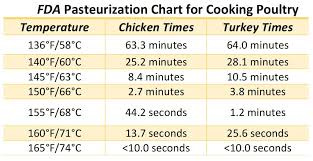
But there’s a difference between bending rules at home and misunderstanding systemic risk. Meme-ified food fear is vibes-based. Regulatory risk is structural. And yet talc still exists in cosmetics and foods…
let’s give ‘em something to talc about
Talc is present in cosmetics, because it soaks up oil to reduce shine and is softer to the touch more than other carriers. Because of its Generally Recognized As Safe determination by FDA, It’s also used in foods and medicine as processing aids for a similar reason.
The issue is that talc is commonly co-located with asbestos in mines, and asbestos is undeniably carcinogenic. Now, not all talc is contaminated with asbestos, but the issue is that companies self-determine what “asbestos-free” talc means and choose what testing confirms this.
The way we test talc for asbestos wasn’t created by regulators; it was created by the cosmetics industry in the 1970s. They built a testing method that could only detect asbestos if it was basically shouting at you from across the room. Instead of using electron microscopy (the sensitive, “we can actually see microscopic cancer fibers” method), they pushed for a test built around X-ray diffraction which is great for spotting visible minerals but terrible for spotting thin, needle-like asbestos fibers.
And FDA accepted it.
Not just accepted it, praised the industry for solving its own safety problem. For decades, companies could legally say “asbestos-free” because they were using a test nearly guaranteed to return a negative result. If the question was “is there asbestos?” the test was essentially answering “tough to tell, but looks good from this here!”
This became the international standard. It shaped how talc was sourced, validated, and marketed. It’s why lawsuits today keep uncovering old internal memos where companies worried, not about contamination itself, but about the possibility that better testing might reveal it. Because if a sensitive test suddenly starts finding fibers, you would have a serious regulatory problem.
So while the internet obsesses over seed oils in mayo, we’ve had 50 years of talc regulation that basically boiled down to: “If you don’t look too closely, it’s fine.”
FDA finally wakes up…then hits snooze
After fifty years of pretending the industry’s “I’m blind, girl” testing method was good enough, Congress finally stepped in. In 2022, MoCRA told the FDA to modernize talc testing basically saying that there are better methods to determine talc is asbestos-free that industry isn’t using. And in 2024, to their credit, the FDA actually tried. They proposed a rule requiring TEM, the sensitive kind of electron microscopy that’s been the scientific standard for decades but somehow never the regulatory one.
Then MAHA entered the chat.
After industry comments rolled in, the FDA quietly withdrew the entire proposed rule and said they’d “reconsider and re-propose” it later. Advocacy groups were understandably enraged and confused, while industry’s stance boiled down to: “wow, this testing seems expensive.”
So we’re back where we started: an ingredient that can be contaminated with asbestos, a regulatory body that agrees testing needs an upgrade, and a testing update that is currently in limbo. For an agency that spent decades rubber-stamping industry-designed methods, this should have been the easy win. Instead, it’s another year of “asbestos-free” meaning “asbestos-undetectable-by-a-test-designed-to-not-detect-it.”
It’s honestly impressive. We got a whole federal law to push FDA toward real testing, FDA finally reached for the good microscope, industry said “nah, I’m good,” and the FDA just folded. And yet I can open TikTok right now and find 900 videos explaining why sunflower oil is a government psyop. We’re out here debating vinaigrette while asbestos testing is stuck in a holding pattern.
This is the gap that always gets me: the risks we meme, and the risks we ignore. Seed oils get the thinkpieces, the atlases, the 40-minute YouTube breakdowns. Talc co-located with asbestos gets a shrug and a voluntary standard from 1976. One is emotionally intuitive; the other requires knowing what an electron microscope is. And the algorithm will always choose the former.
I’m not saying throw away your blush or your cereal. I’m saying the things that feel scary are not always the things that are scary, and the things that feel boring are often the ones worth paying attention to. Food safety isn’t vibes. Regulation isn’t an aesthetic. And “asbestos-free” shouldn’t depend on whether a legacy test feels convenient for a multinational.
If we’re going to freak out about ingredients, maybe start with the ones that come with a mineralogical plot twist. Or at the very least, let’s stop pretending that canola oil is the final boss while talc is just a non-player character.
Sooo good. Talc about irony!