

I was thinking about ‘gastronomy’ after reading a post about coffee in Spain. The claim was simple: much of it tastes burnt (great posts about Spain from the inside). The beans are roasted dark, the extraction pushed hard, the result sharp and a little ashy. By the narrow standards of specialty coffee, it misses the mark.And yet it works.
It works because you are in Spain. You are standing at a bar mid-morning, the street bustling, ceramic cups clinking against saucers, the air flowing freely through the open door. The espresso arrives quickly and cheaply. No one is narrating flavor notes. The charred beans become part of the rhythm of the place. Spanish coffee bar culture is great, but focuses on milk and foam combinations: un nube, una sombre, un cortado . That gap between poor beans and a great hang is the difference between a dish, a cuisine, and gastronomy.
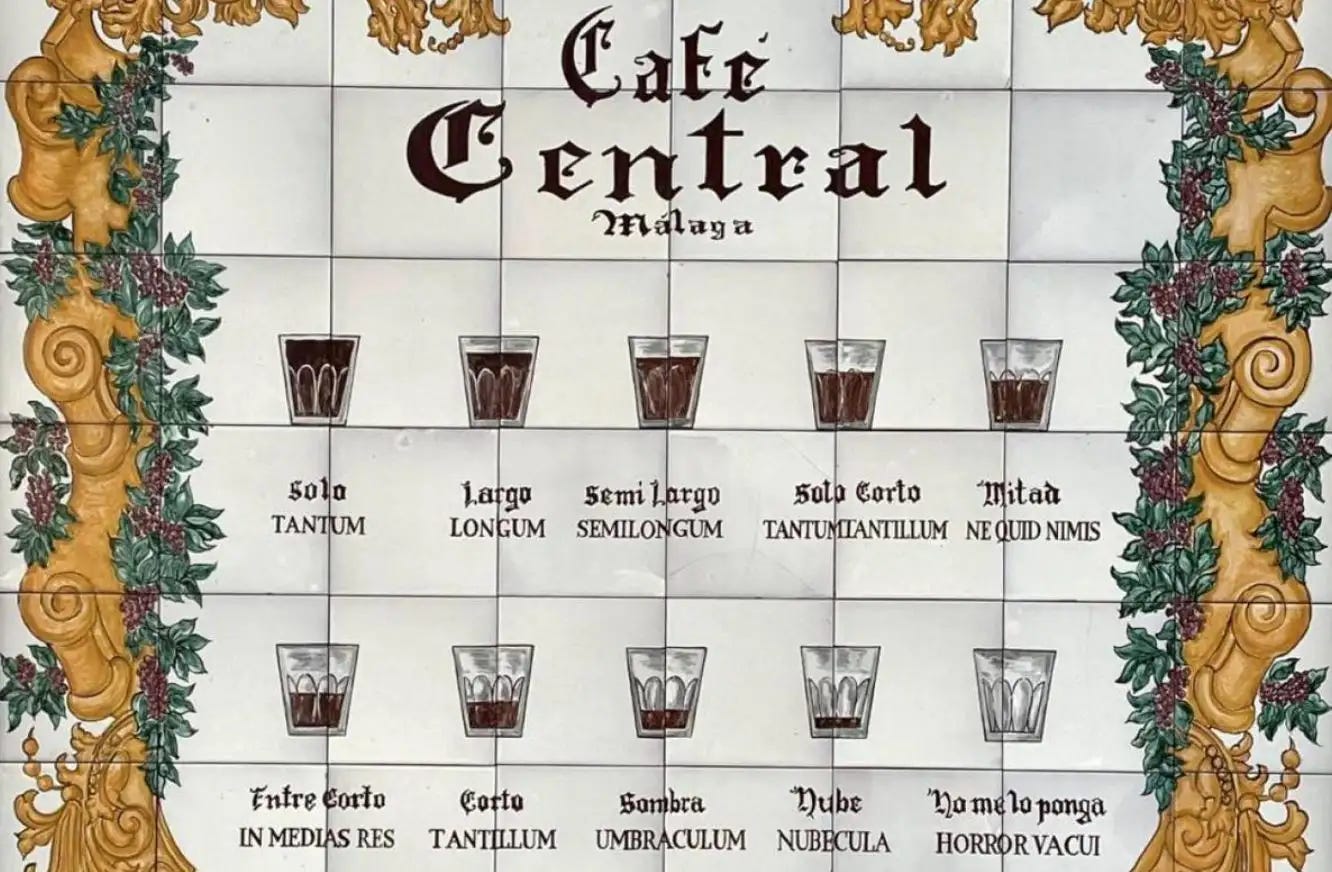
A dish is the smallest unit. A cup of coffee, a warm tortilla or a bowl of gumbo. It is bounded and specific. You can isolate it, reproduce it, judge it. It can succeed or fail on technique of the cook alone.
Cuisine is the patterned set of dishes and techniques that belong together over time. It is a repertoire shaped by geography, repetition, and shared expectation. It’s almost a language of how to assemble ingredients from your region. Mexican cuisine uses nixtamalized corn and the comal. Cajun cuisine includes roux and crawfish and cast iron. Danish cuisine includes preservation, rye, cold-water fish, and bitter spirits. Cuisine is an organized memory that gets transmitted through generations and across borders.
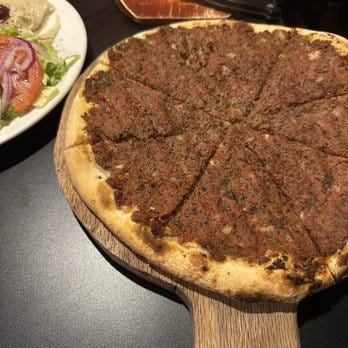
You can see cuisine at work when dishes migrate. Pizza becomes a platform for Mediterranean pitza: basically an open faced kebab. A Jordanian flavor logic given an Italian form. The dish is recognizable, so the techniques for pizza and kebab both shift. Both cuisines refracts slightly differently than had before.
Gastronomy sits above that level. It is how people eat within their constraints. Not just what is cooked, but when it is eaten, how often, by whom, and under what pressures.
It includes whether tortillas are made daily because corn is local and labor is structured around that cadence. It includes whether coffee is taken standing at a bar or carried in a paper cup through traffic. Gastronomy binds ecology, labor patterns, infrastructure, climate, and pleasure into a coherent pattern that makes certain cuisines durable and others fleeting.
This is why I think that while nutrition science is important, gastronomy is greater.
Nutrition science can tell you about caffeine levels, lipid oxidation in dark roasts, the amino acid profile of nixtamalized corn. It can quantify and optimize. Gastronomy explains why the burnt espresso is still satisfying and why daily tortilla-making persists even when industrial bread is cheaper. It accounts for meaning and constraint at the same time.
Food endures when it fits how people already live. A dish can be flawless and still feel misplaced if it does not align with daily rhythms and shared habits. When it does, it stops being novel and starts being normal.
Some dishes taste good once. Others taste good enough to define an entire culture. Gastronomy decides which is which.
poor beans and a great hang >>>