

Since returning to writing more consistently from all of the nuptials, I’ve clearly had cake on the mind. I recently was listening to a podcast of comedians ranking their favorite desserts and was pretty floored by one’s proclamation that red velvet cake is their top choice. By almost any measurement, that answer is dutch apple pie a la mode, first off. And second, I like many, assume red velvet to be yellow cake or light chocolate with red 40, or beet juice (if that’s your thing).
Yet, the birth of this blog was for me to document food history and science wormholes that I’ll spend the next two hours reading on, and today that was red velvet cake.
Presentation
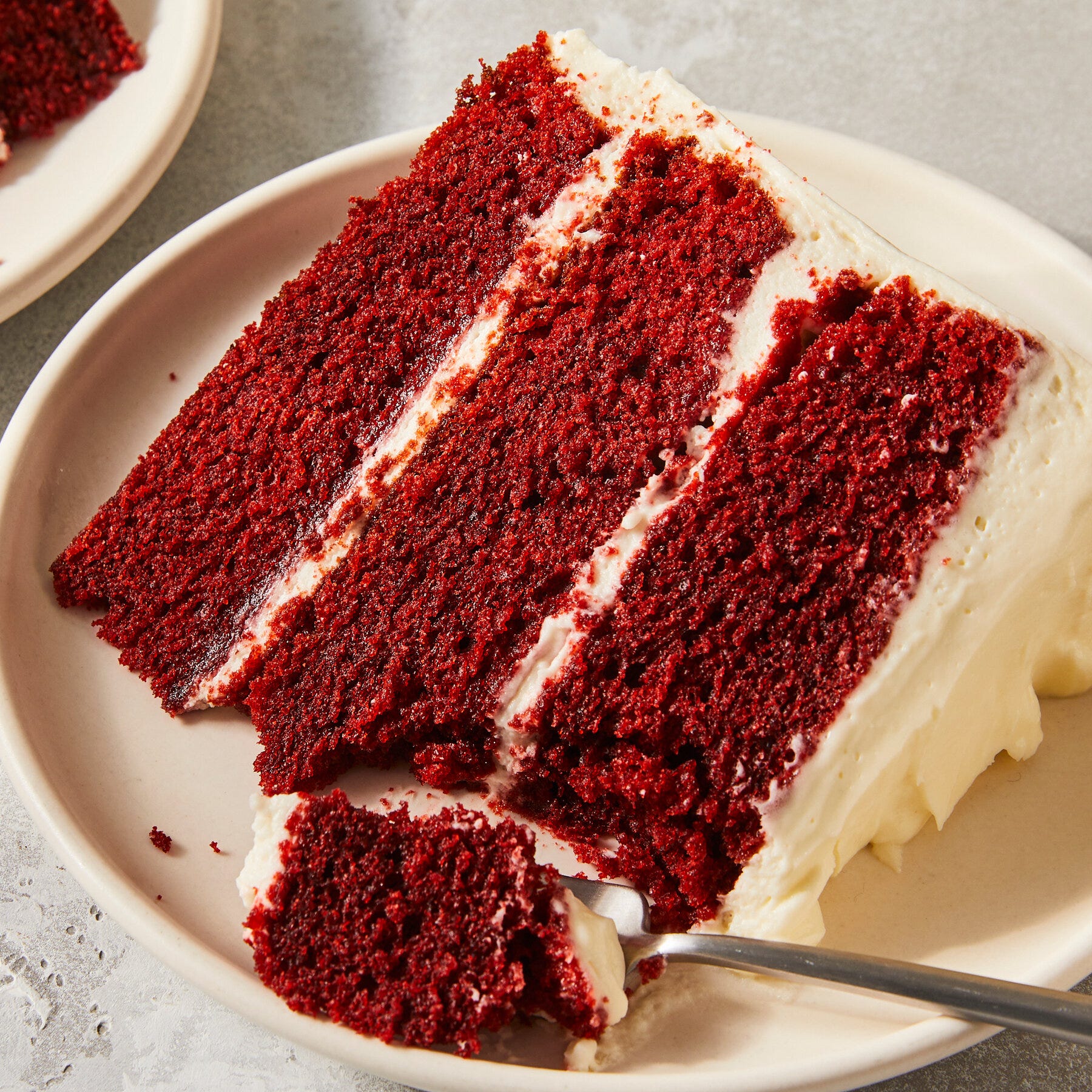
First off, red and white is a pretty shocking color for something that isn’t full of berries. And unlike your standard chocolate cake, red velvet has cream cheese frosting. The king of frostings (fuck off buttercream, I need that lactic tang). Off the slice, it’s your typical tiered layering of cakes that claim to be handmade, while the only thing that hand did was turn on the production equipment.
Regardless of how you weigh the prominence of the material that touched your cake, it’s sharp. Hard lines, ivory matte sheen: this guy’s ready for the big leagues. It makes its way into cupcake molds at times and with a blueberry and strawberry to confuse all expectations. Line up snug on a July Fourth buffet laid out on a picnic table and people are impressed to see them parallel park next to the Costco cookie tray. Quick to be eaten, though leaving false impressions of a raspberry cream cheese dream.
This is where red velvet begins to lead off the trail for me because we eat with our eyes first, and if you ate an apple that tasted like a banana, you might not be disappointed, but you’d have questions. The history of red velvet, and its modern mutation, are interesting, though I don’t think you can get into that nuance after your second beer brat off the grill.
Science
Natural, or non-alkalized, cocoa powder (NACP) is quite different from its Dutch brother. It is still raw from fermentation and, many times, you can buy it unroasted. With this lack of heat and acidic transformation, NACP is fruity, tangy and bitter in a vegetal sense. More importantly in the context of our cake, color compounds in cocoa, called anthocyanins, are undisturbed. See, alkalization by soaking the raw cocoa in a base (normally K2CO3)transforms these color compounds and chain them together into brown polymers. This becomes important in making that red color when you look at the history of red velvet.
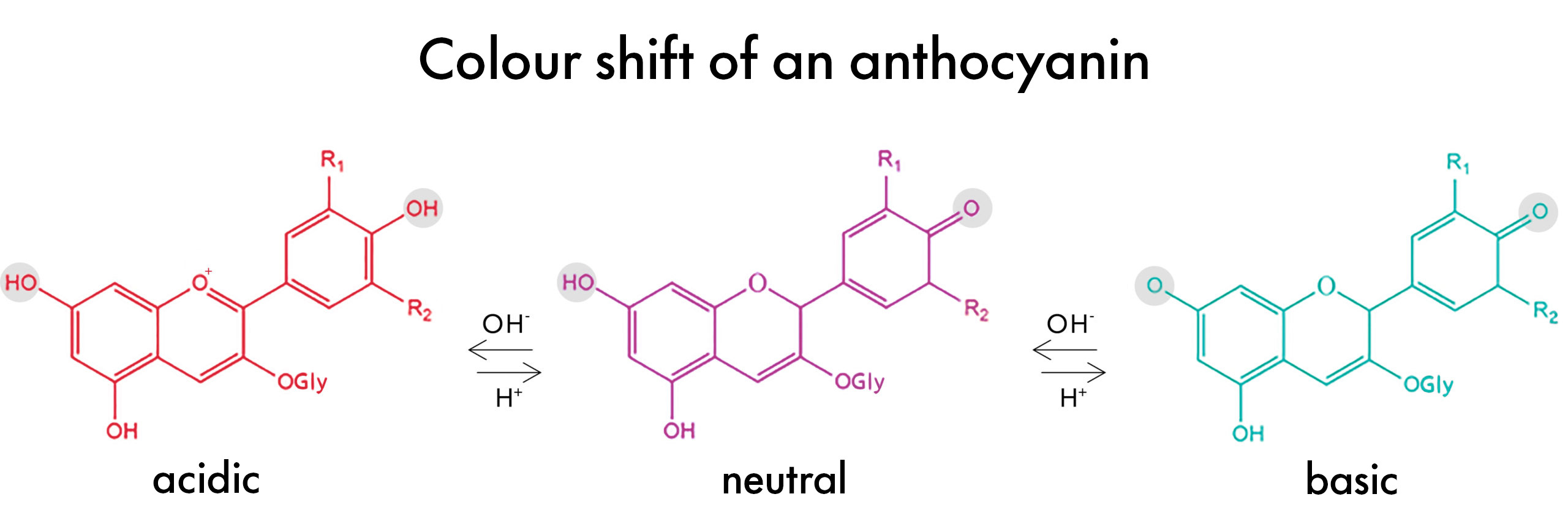
The original cake calls for buttermilk and vinegar, where virtually no modern recipe will list these. The reason is that these two ingredients are quite acidic, and this shift in pH is doing the actual work. Anthocyanins are cation-based pigments, meaning their color is determined by their protonation state. In an acidic environment, the anthocyanin stays intact and holds its red hue. Push the pH up toward neutral or alkaline and the ring structure opens, the molecule destabilizes, and you land somewhere between purple and brown depending on how far you go.
So the original red velvet was red for a real chemical reason: natural cocoa with its anthocyanins intact, hit with enough acid from the buttermilk and vinegar to lock the pigment in its red form.
History
The modern version lost both of those things at once. Dutch process cocoa became the default pantry cocoa through the mid-20th century, which meant the anthocyanins were already gone before we even had a chance. And without the anthocyanins, the acid had nothing to stabilize, so the buttermilk and vinegar hit the road. Red 40 became the patch given our proclivity for turning petroleum into everything. The cake kept its name, its look, and its cream cheese frosting, and quietly lost the only thing that made the color make sense.
I don’t want to pick sides on the Adams Extract versus Waldorf Astoria origin story dispute, but both versions end up at the same place. The Waldorf claims their kitchen developed it in the 1930s, a guest loved it, asked for the recipe, got charged for it, and published it publicly out of spite. Adams Extract, a Texas flavoring company, printed the recipe on their red food coloring packaging in the 1940s as a straight marketing move. One story is about a recipe escaping a luxury hotel kitchen. The other is about a company handing home bakers a bottle of dye to fill a chemical void left behind when natural cocoa stopped being the default. Both are probably partially true, and neither changes what ended up in your grocery store.
At some point in the 20th century, red velvet stopped being a chemistry outcome and became an aesthetic category. The buttermilk, the vinegar, and the natural cocoa couldn’t outlast the eye-appeal. It’s one of the cleaner examples of a food that survived its own obsolescence by keeping the visuals intact, and we all suffer for it.