

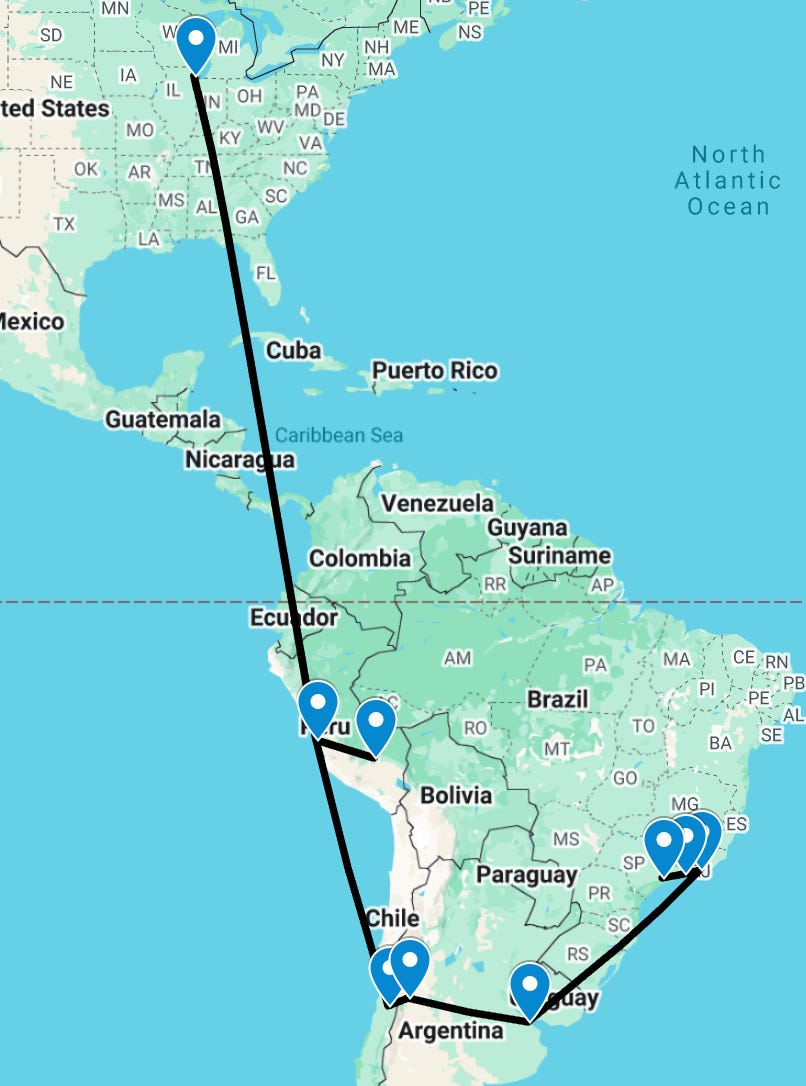
On the last episode of…
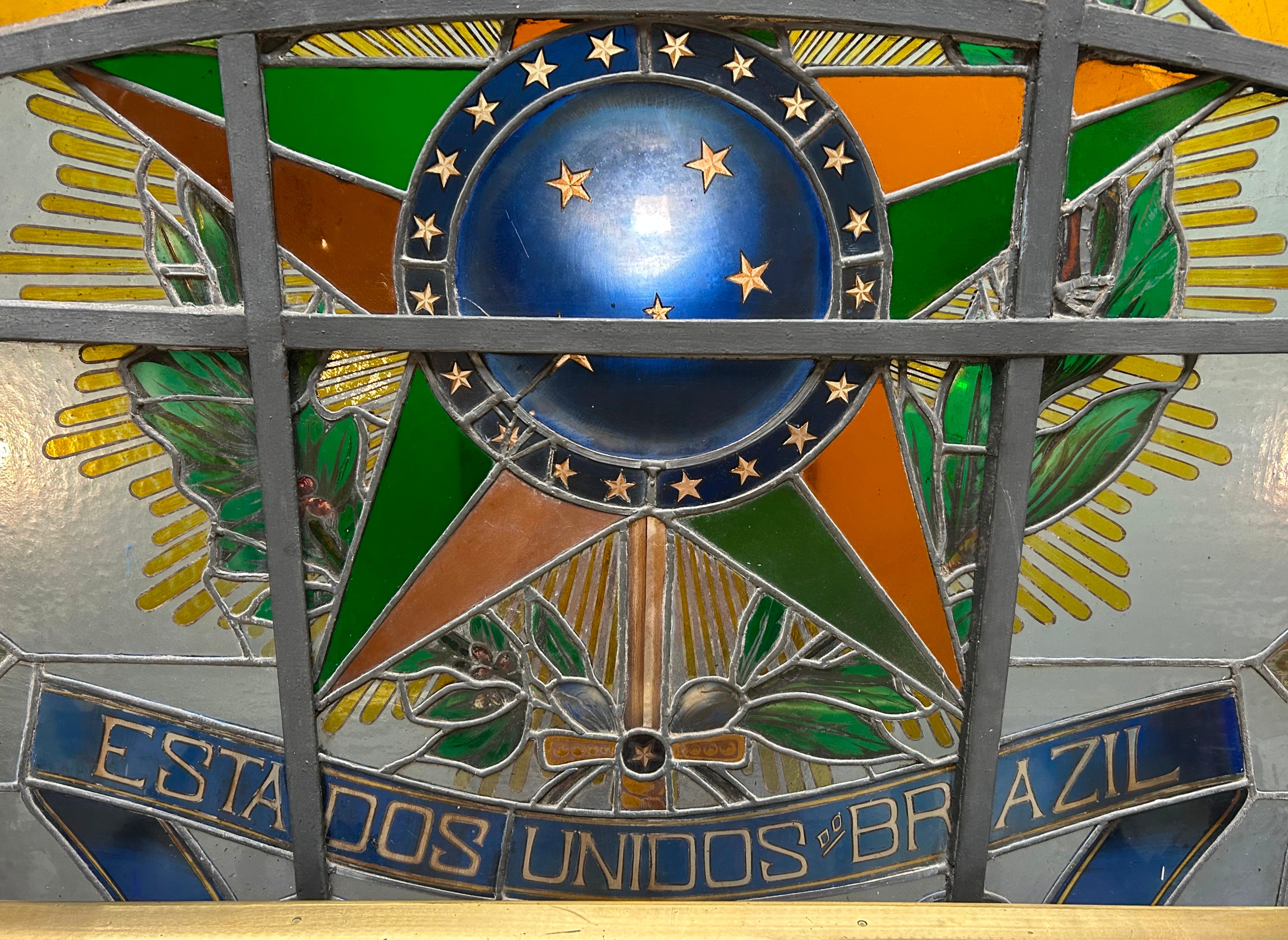
We arrived at night and the humidity smacked you in the face as soon as you stepped onto the jet bridge. Buenos Aires may have been autumnal, but Rio lost the message that it was time to cool down. The air conditioning units in our Argentine Airbnbs have looked like wall decorations, but I got a sense that they were about to be a lifeline for a good night’s sleep here.
Customs took almost no time, but after talking to the agent, we were officially going to need to tune our ears to hearing Portuguese rather than Spanish. It’s a beautiful language and I wrongly assumed that because it’s surrounded by hispanophone countries, most folks would know both languages. Though, more like the US, many Brazilians are surprised that a language other than their mother tongue existed. Ruh-roh.
Recap
Total Miles: 13,087 mi
Miles Traveled: 7,642 mi
Current City: Rio de Janeiro, Brazil
Best thing I’ve consumed
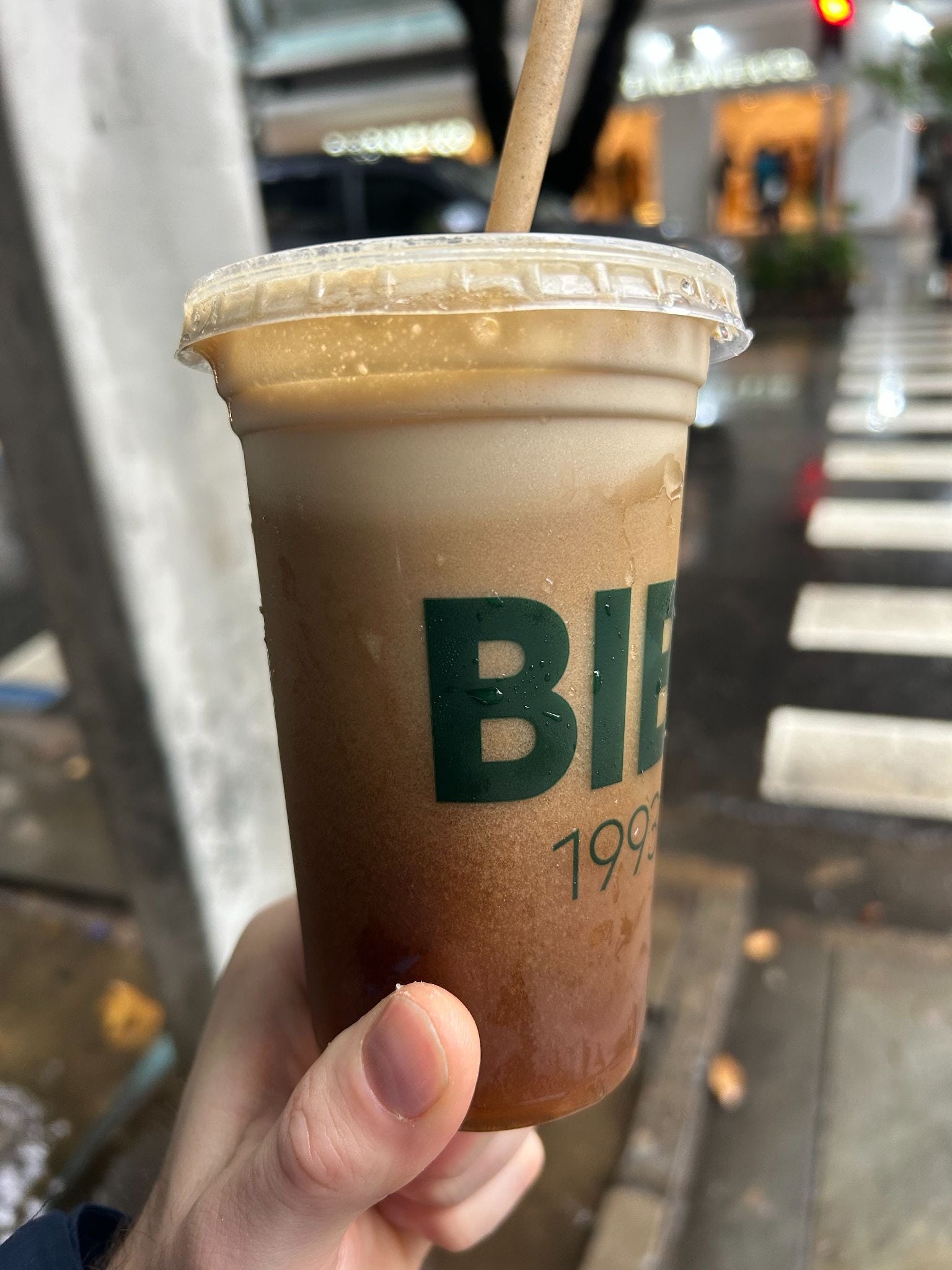
Rio has brought me fully into my Fruit Renaissance, after the Dark Ages of meat, potatoes and empanadas. I cannot describe how elated I was to find Bibi Sucos, a juice counter from the 1990’s that has about 40 varieties of juice you can mix and match. Cashew fruit1, soursop, cupuaçu, and passionfruit were all on the table. We were working this whole week and I became a super user of all things juice. While the guy I always ordered from didn’t know English and I was constantly looking up fruit names on my phone, I think we understood each other. I was the weird foreigner, wearing the same rain jacket, shorts and Tevas ordering a double cold maté with lime, ginger and mint. Bibi gave me a new interest in ways to prepare one of my staple caffeine sources and I already have iced mate com limão recipes circling in my mind for Chicago summer.
Staying with the liquid-based consumption, cachaça and caipirinhas are undoubtedly one of the best combinations of all time. Cachaça is a sugarcane spirit, just like rum, but the processing is different and creates a flavor profile that hits my tastebuds in a more perfect way. Rum is typically made from the molasses pressed from sugarcane, while cachaça is made from the fresh sugar cane juice. This freshness carries through into a more green tasting and smelling spirit which pairs seamlessly with the level of fresh fruit juices that normally accompany it.
Caipirinhas have always sat in my mind as the Brazilian margarita: lime, clear spirits and sugar. But what I realized about Brazilian fruit consumption is that the peel and pith make up as much of the juice experience as the liquid we all squeeze out. Caipirinhas use muddled limes, more similar to a mojito, and are not overly sweet. Our favorite aspect of them is the ability to add passionfruit juice (suco de maracujá) to make it really sing. My boss in Denmark had brought cachaça de jambú home after the holidays and I hadn’t had it since 2018, so when I saw it at Pedra do Sal with cashew juice, I jumped at the chance. Jambú is an Amazonian herb that is soaked in cachaça which gives a numbing, tingling sensation to your whole mouth, much like Szechuan peppercorns. Spilanthol2 and hydroxy-alpha-sanshool3
Finally, everyone expects the beef to be the pinnacle of Brazilian cuisine. There are seafood dishes that are classics like moqueca, a type of seafood stew, and bean and pork dishes like feijoada, but I think there are the quick eats that need more inspection.
Pão de queijo has held a place in my heart since my roommate from Coritiba baked a massive batch in the throes of our collective Thanksgiving hangover in San Sebastián. Brazi Bites are a decent CPG interpretation of them, but I was excited about a different type of cheese: queijo de minas. A fresh cow’s milk cheese with a production process deemed an Intangible Cultural Heritage by UNESCO, it finds its way into a range of dishes, spanning every meal of the day, salty and sweet alike. Minas cheese is Brazil. Brazil is Minas.
It tastes like salty fresh milk and takes on the flavor of anything you pair it with. It has a squeaky texture like halloumi when lightly heated, but will melt into a mozzarella texture under sustained cooking. I was initially turned off by it because it expresses a lot of water, and when it’s sitting on a buffet line looks like the cooking staff put it on ice cubes that had melted hours beforehand. This is a wet ass cheese and I’m about to back that Minas block right into my little garage.

My first recommendation for the peak experience with this cheese starts with the Romeu e Julieta, which is solely guava paste and Minas. You’ll likely be able to find it in bakeries wrapped in a puff pastry, which is a great pairing with a cafézinho. And if you’re peckish after a day at the beach, you’ll need to reach for a misto quente, a simple ham and cheese sandwich that will knock your socks off. I’m clearly biased (but not yet sponsored), but Bibi Sucos has perfected it, and it goes perfectly with a mate com abacaxi e maracujá (cold mate with pineapple and passionfruit). Rio is truly a special place.
Cashew nuts are actually quite interesting in that they are poisonous knobs on the bottom of an edible fruit. Workers that process cashews typically have to wear a lot of personal protective equipment to make sure they are safe from the urushiol, the oily compound that poison ivy, poison sumac and other plants use to fuck you up.
The compound from jambú (Acmella oleracea), which has the coolest translation to English as “buzz buttons” or “Electric daisy”
The compound found in Szechuan peppercorns, sansho peppers and other members of the Zanthoxylum genus.