

Your niece is at her big summer birthday party on the lake. After running around chasing the dog, she grabs what she thinks is a Coke off the top of the cooler and takes a sip. She stops and winces because there’s a burn she doesn’t recognize, a rounded warmth at the back of her throat, a complexity her ten-year-old palate has no frame for. She asks her dad what’s wrong with her drink. He looks at the can and tells her she grabbed a zero-proof Cuba Libre, formulated with dihydrochalcones.
She actually kind of likes it. On the way home, she works out that the easiest way to get that taste back is with alcohol. While kids have always been sneaking alcohol for as long as it’s been sneakable, a recently filed patent1 could train a young palate to seek out that sensation with compounds that are food-safe and easily commercializable.
what’s in the can
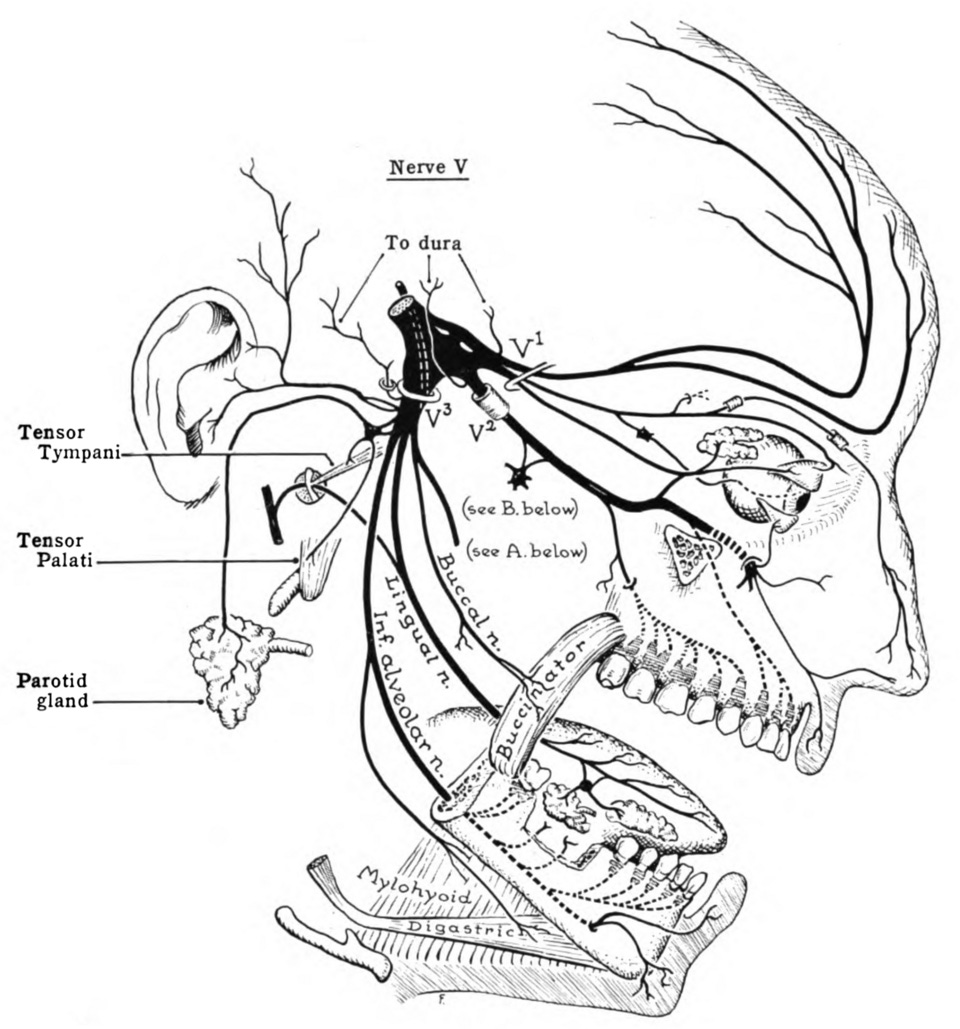
Enter dihydrochalcones. They are a small class of flavonoid compounds that activate the same three nerve channels alcohol does:
TRPV1 registers the warmth. Capsaicin works on the same channel; it’s what makes whiskey feel hot in your throat.
TRPA1 senses pungency and the slight ongoing irritation that makes a spirit linger.
TRPM8 is the cold receptor, the one menthol activates. Alcohol actually blocks activation, which is why a strong drink feels paradoxically warmer the longer you hold it in your mouth.
Anyone who’s sipped a no- and low-ABV drink knows that there is a bit missing. Product developers are keen, and learned that capsaicin and/or menthol can bring an element of this back, but with a different character than the ethanol (booze) it’s meant to replace. Chasing the burn with capsaicin only hits the first channel, where menthol has the opposite sensation on the third channel. At best, the result is drops into an uncanny valley2, tasting more like a minty hot sauce than a spirit. Dihydrochalcones, at 25 to 75 parts per million, fire all three channels in a coordinated pattern to light up your trigeminal nerve the same way it would for bourbon.
This class of compounds does exist in nature: one called phloridzin is in apple peel, neohesperidin is in citrus pith. Their natural concentrations are low, locked in fiber, and surrounded by everything else the fruit contains, so you wouldn’t pick up on them initially in those settings. The thing is, DSM-Firmenich is patenting engineered variants, delivered at concentrations well above what you’d encounter eating an apple skin, in a liquid that hits the trigeminal nerve in seconds. While the class of compounds called “dihydrochalcones” are naturally-occurring, it would be a stretch to find these engineered ones in the wild.
think of the kids
So, are we sure dihydrochalcones in a children’s beverage would pass FDA review tomorrow? Sure, the compounds are food-safe and the dose is genuinely small, but how could this theoretical CPG drink condition a developing palate to associate the chemesthetic signature of alcohol with reward, ten or fifteen years before the legal drinking age? We should consider what the intended outcome of the patent is and look at regulating it similarly. Your niece doesn’t know what she discovered, but the product team that formulated her “weird-tasting soda” does.
Marty Makary (who bestowed us with the new food pyramid) recently resigned, in part, after being forced to approve fruit-flavored nicotine vapes. This is a public spat that I think everyone can understand because tying sweet flavors to an addictive substance can positively reinforce trial. In a way, it’s how kids get interested in alcohol in the first place: by spiking their favorite sodas to mask the taste. The argument nobody is making about dihydrochalcones is that they give a sensory hook without the addictive substance. This inverse argument is easier to brush off: “well there’s nothing in there to get them in trouble” but kids that played with candy cigarettes were twice as likely to become smokers later in life3 and somehow those are still legal in the US4.
think of the recovering alcoholics
For people in recovery, there is plenty of research looking into what shape relapse can take. Cue reactivity research suggests that the sensory profile of a substance can reactivate craving pathways even when the addictive substance (ethanol in this case) is absent. That cue can be visual, like the label on a bottle; olfactory, like the smell of beer; or trigeminal, like the burn of a sip in the back of the throat. A zero-proof bourbon that fires the exact nerve channels of real bourbon is a sensory and motor cue that could push someone toward relapse.
Human psychology is fascinating though because these same kinds of cues can also help people stay sober, which is part of why Liquid Death cans look like beer cans. The sensory cue of a cold tallboy in your hand is, for some people, exactly what they need to not be holding a beer. Whether firing the same nerves as alcohol gives someone in recovery a seat at the table or pushes them toward relapse is the question. As far as I can find, nobody is funding the research.
what problem are these molecules even solving?
The patent claims that dihydrochalcone is solving a real consumer problem. People want to drink less alcohol for health reasons, but low- and zero-alcohol versions are missing that “oomph” compared to the real thing. Breweries and spirit makers have traditionally padded these beverages with extra sugars and carbs to compensate for what alcohol brings, which defeats the health purpose. These compounds offer a workaround: add a pinch of the right dihydrochalcone and the drinker gets the sensory experience of alcohol without the calories, sugar, or intoxication.
I am sold by the coolness factor and having these types of sensory modulators in my tool box. When I limited my drinking last year, I certainly noticed this lack of sensory feedback that I enjoyed as a consumer. Being able to target specific nerve receptors is incredibly powerful as a food scientist, and not an option we always have at our disposal. We also have a call to make in deciding who the intended consumer is if we decide to use these compounds. It’s fascinating that we can decouple the sensation of alcohol from its effects in this way. The negative ways this tool could be used fill me with discomfort.
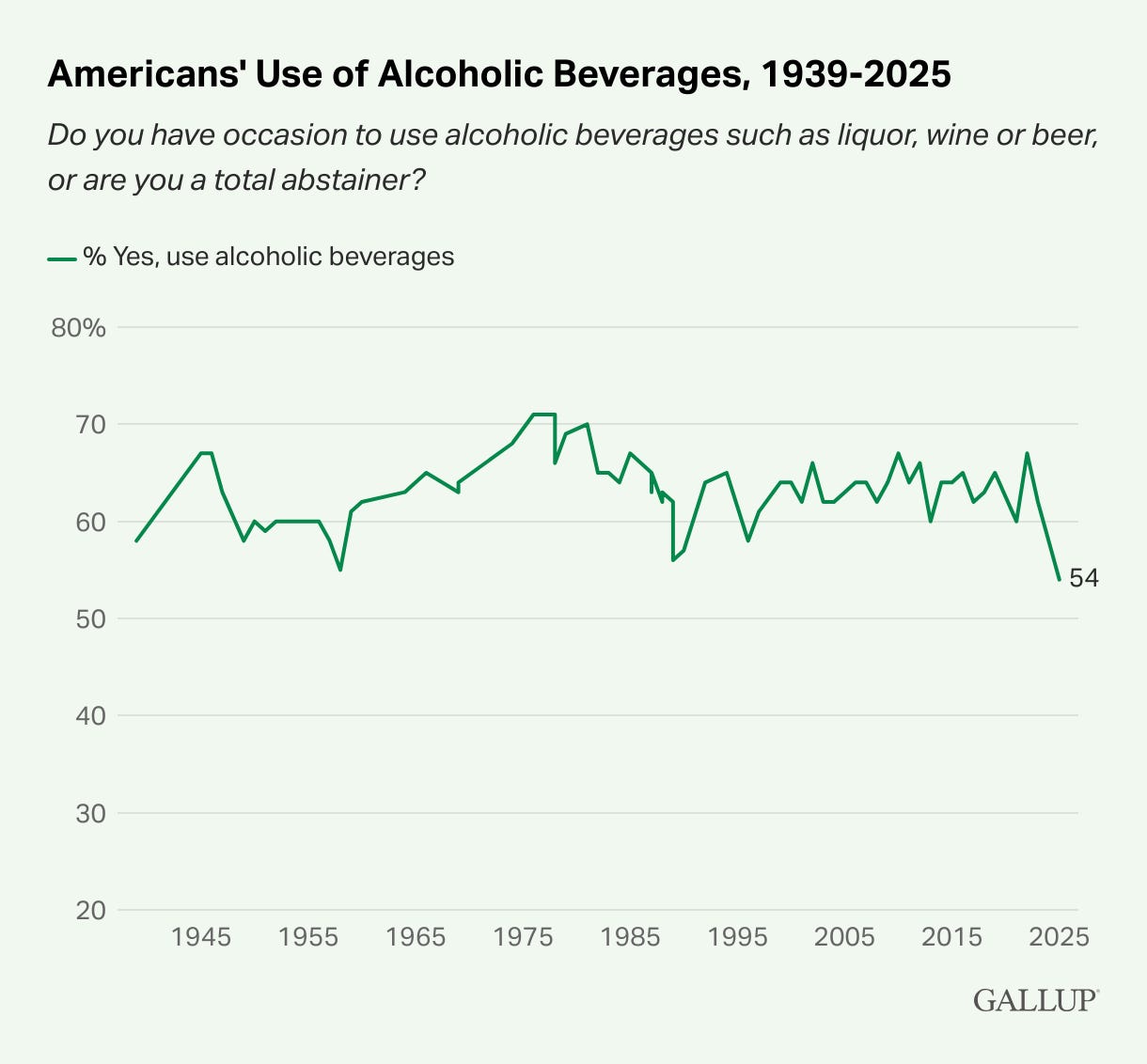
We’ll never be in the room with the teams who decided to pour millions of dollars in the pursuit of finding these compounds, so we won’t know what their complete intentions were here. The reality of the market is that the share of US adults who drink alcohol just hit 54%, a ninety-year low, with the sharpest declines in the past two years. More than 100 countries now tax sugar-sweetened beverages. So do these large breweries now have a way to retain that margin in the long haul by targeting vulnerable groups?
Coke has been buying into alcohol for years. They own Topo Chico Hard Seltzer5, and that business is watching the same ninety-year low in US drinking rates as everyone else in the category. A conglomerate sitting on both a declining alcohol portfolio and a soda brand with the cultural machinery to license Bluey, K-Pop Demon Hunters, or whoever your niece is currently obsessed with has every commercial reason to connect those assets through a limited release using DSM-Firmenich’s compound. Nobody will fund the research that would tell you what it means for her palate. We’ll find out sometime around 2040, in a Gallup poll, when the number is already the number.
State paternalism as a reflex doesn’t interest me. What I want is the conversation that happens before the product launches. The fruit-flavored vape fight is happening in public, loudly, and, unfortunately, after the fact. This one hasn’t left the station yet and there’s still time to make sure the right passengers are on board.
“Dihydrochalcone compounds for enhancing alcohol perception”
Summary:
The present disclosure generally relates to dihydrochalcone compounds and their use for enhancing the perception of alcohol (ethanol) in food, beverages, and other comestible compositions. In certain aspects, the disclosure provides the use of such dihydrochalcone compounds to enhance an alcoholic (ethanolic) flavor of a beverage, for example, a low-alcohol or zero-alcohol beverage. In certain other aspects, the disclosure provides low-alcohol or zero-alcohol beverages containing such dihydrochalcone compounds.
The discomfort of experiencing something almost identical to the real thing but crucially incomplete. Here, the trigeminal nerve recognizes bourbon's burn, but the body gets no intoxication. The sensation matches the expectation; the outcome doesn't.
A 1990 study found that sixth graders who ate candy cigarettes were twice as likely to smoke cigarettes as those who did not, and a 2007 study of 25,887 adults found that candy cigarette consumption was reported by 88% of both current and former smokers versus 78% of never smokers
I did like them but didn’t become a smoker! There are many other social factors that go into a child becoming a smoker later in life that I’m not accounting for.
Coke purchased Topo Chico for $220MM in 2017, four years before the hard seltzer came out.