

I first started drinking ayran when I lived in Copenhagen. Being a grad student, I spent a lot of time wandering markets in my neighborhood, the kind that sell a narrow slice of everything, and one morning after a late night a coworker handed me a cold bottle and told me to drink it. Salty, lightly fermented, and incredibly refreshing, it was love at first sip. I started noticing it in small shops after that and kept buying it whenever I could.
Ayran is a salted yogurt drink, diluted with water and fermented before it ever reaches the bottle. It’s sharp enough to wake you up and steady enough to drink without thinking. It looks like a fermented product and tastes like one, tangy and alive, but it’s thin, savory, and stable in a way that suggests most of the biology has already been settled. It isn’t always easy to come by, though in my part of Chicago it’s decently available, to the point that I can walk around the corner for a mint-flavored one. Having it around eventually produced the question that tends to surface when something becomes familiar: could I make this myself?
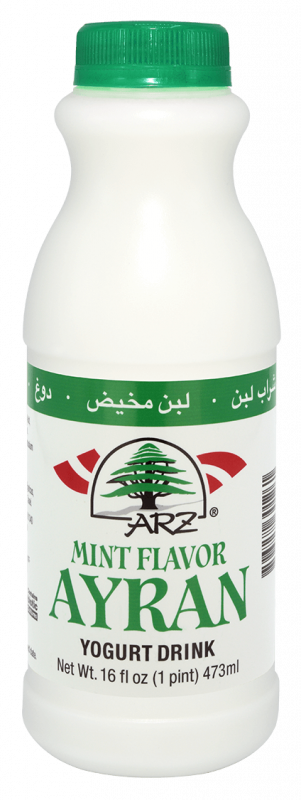
That question turns out to be less about ayran than about where fermentation actually lives in the modern food system. What you buy is yogurt that has already been fermented somewhere else, under tightly controlled conditions, long before it reaches your fridge. Ayran is what happens after that work is done: yogurt diluted, seasoned, and stabilized enough to survive distribution. Once you see that, the foggy path ahead becomes clear. Making more ayran doesn’t start with ayran. It starts with yogurt. And making yogurt starts with milk that can still be fermented.
That’s where I reached for Fairlife and, after filling my Instant Pot, assumed I was about to learn a lesson the hard way. Ultra-filtered and lactose-free sound like a problem for fermentation, especially if you still think lactose-free means no lactose. No lactose should mean no substrate for yogurt cultures, and no substrate should mean no lactic acid. Instead, the yogurt set cleanly and quickly, with better structure than I expected.
If the yogurt had failed, it would have confirmed my “lactose-free milk means no yogurt” intuition and closed the loop. But fermentation doesn’t care about marketing terms. It only cares about chemistry in the matrix. And chemically, something was clearly still there.

Fairlife didn’t remove the sugar from the milk. It broke lactose into two new sugars. Lactose is a disaccharide, glucose bound to galactose and the enzyme lactase simply splits that bond. The sugar remains fully present, still fermentable, still caloric, just no longer recognizable as lactose to either a digestive system that struggles with it or a label that’s allowed to claim it’s gone. What’s more, lactose is perceived as significantly less sweet than either glucose or galactose, and the yogurt bacteria behave differently because the work of breaking things down has already been partially completed.
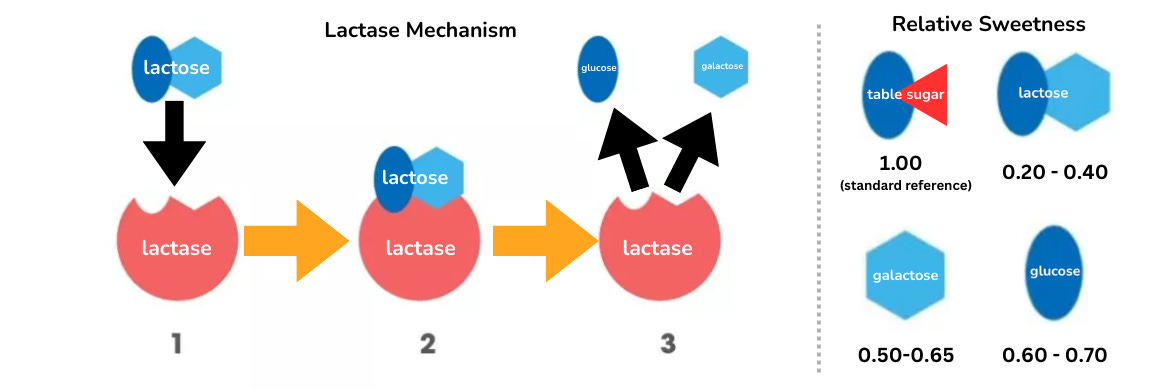
Once that clicks, the rest of the behavior lines up. The yogurt sets faster with more protein. The acidity tastes subtle. What looks like a home-kitchen quirk starts to resemble a design choice that scales well. Ultra-filtration concentrates protein. Enzymatic treatment simplifies sugars. Together, they produce a raw material that behaves predictably across both factories and homes. By the time I diluted the yogurt with water and salt and turned it back into something recognizably like ayran, the drink itself felt almost incidental. The meaningful transformations had already happened upstream, in semi-permeable membranes, enzymes, and assay limits, long before I picked up a whisk.
What made this worth sitting with was how ordinary the explanation became. In the U.S., we’re largely comfortable with homogenization, a mechanical process that reduces the size of milkfat globules, adsorbs casein and creates a Pickering Emulsion. Basically this prevents the fat from rising to the top. Filtration is fine because we’re used to Greek yogurt being filtered, but enzymatic breakdown feels different, more technical and therefore more “suspect”, even when Fairlife is addressing a constraint the dairy industry has never been able to wish away: a large share of the population can’t comfortably digest its core ingredient.

Lactose intolerance has always been treated as a consumer problem rather than a systems problem, something individuals are expected to manage by avoidance or supplementation. Of course, Lactaid exists, but it’s a stale brand and doesn’t fit into our new world of protein-maxxing. Fairlife takes a different approach by moving the work upstream, finishing part of digestion early and concentrating protein in the process, producing milk that aligns with contemporary demand for digestibility and nutrient density while remaining legible to both microbes, manufacturers, and consumers. That combination helps explain why a company like Coca-Cola would see it less as a novelty and more as a solid bet on upending dairy.
Seen this way, the yogurt actually fermenting wasn’t surprising. The factory hadn’t interfered with fermentation building blocks so much as changed the conditions under which it now happens. Home cooking didn’t disappear here. It inherited a narrower, more engineered starting point. And that’s the distinction that feels worth paying attention to in conversations that flatten all “processing” into the same moral space. The question isn’t whether food has been processed. It’s how, why, and which constraints that processing is actually trying to solve.